Let’s Advocate for Zero Hunger
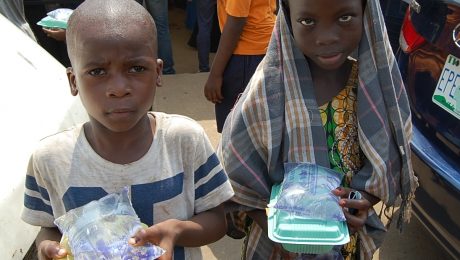
Let’s Advocate for Zero Hunger by ChiYoWo
The Sustainable Development Goal 2 promotes zero hunger. The target is to end world hunger along with malnutrition by the year 2030. Another target is to double the agricultural productivity and income of small-scale food producers. The UN says, “It is time to rethink how we grow, share and consume our food.”
In Nigeria, there are 4.5 million that are in need of food assistance with hard to access regions like the Borno and Yobe states being considered to be in a severe food crisis, some even saying conditions are famine like. There are an estimated 244,000 children that are suffering from acute malnutrition. If treatment is not provided soon, 49,000 children are at risk of dying.
Unfortunately, hunger is becoming more and more common around the globe. Let’s take a quick look at some quick facts provided by the UN.
- Globally, one in nine people in the world today (795 million)are undernourished.
- The vast majority of the world’s hungry people live in developing countries, where 12.9 percent of the population is undernourished.
- Poor nutrition causes nearly half (45 percent) of deaths in children under five – 3.1 million children each year.
- 66 million primary school-age children attend classes hungry across the developing world, with 23 million in Africa alone.
- In sub-Saharan Africa, projections for the 2014-2016 periods indicate a rate of undernourishment of almost 23 per cent.
These horrific and alarming facts are only a brief look into what hunger is doing to people all over the globe. It is time for all of us to come together and commit to the eradication of hunger.
To get more information and the Sustainable Development Goals please visit: https://sustainabledevelopment.un.org
For information and facts about hunger as well as how you can help in the fight against hunger please visit:
https://www.unicef.org/nutrition/
https://www.un.org/zerohunger/
Sources
[1.] United Nations – http://www.un.org/sustainabledevelopment/hunger/ [2.] World Food Programme – https://www.wfp.org/emergencies/nigeria
- Published in BLOG
Why is Gender Equality Important?
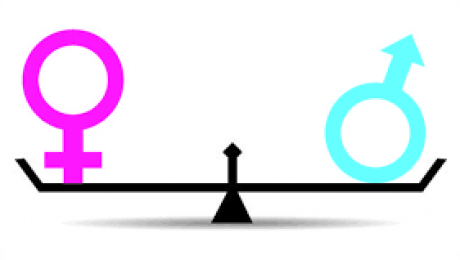
Why is Gender Equality Important? by ChiYoWo
Every single one of us wants a peaceful, prosperous world so why is it that gender equality is still a struggle for us to achieve? Not only is gender equality a basic human right, but it lays a foundation for a more sustainable world. That is why gender equality is the 5th goal on the 2030 Agenda for Sustainable Development.
Why is gender equality so important? Well, about half of our world’s population is represented by women and girls (about 3.52 billion) which mean they make up half of its potential. When issues like gender inequality persist it causes social progress to become stagnate, promotes poverty, and leaves our young girls and women without access to healthcare, education, and proper nutrition.
Quick gender equality facts provided by the UN :
- Women in Northern Africa hold less than one in five paid jobs in the non-agricultural sector. The proportion of women in paid employment outside the agriculture sector has increased from 35 percent in 1990 to 41 percent in 2015.
- In sub-Saharan Africa, girls still face barriers to entering both primary and secondary school.
- Globally, nearly 15 million girls under age 18 are married every year—or 37,000 each day.
- Worldwide, 35 percent of women have experienced physical and/or sexual intimate partner violence or non-partner sexual violence.
For our world to keep progressing, gender equality has to happen. We must harness and use the potential of our girls and women. Providing our girls and women with equal access to education, healthcare, and work will not only fuel sustainable economies, but it will also benefit all societies economically.
Some of the targets for goal five on the UN’s Sustainable Development Goals list are:
- To end all forms of discrimination against all women and girls everywhere.
- Eliminate all forms of violence against all women and girls in the public and private spheres, including trafficking and sexual and other types of exploitation.
- Eliminate all harmful practices, such as child, early and forced marriage and female genital mutilation.
- Ensure universal access to sexual and reproductive health and reproductive rights as agreed in accordance with the Programme of Action of the International Conference on Population and Development and the Beijing Platform for Action and the outcome documents of their review conferences.
Please, join us in raising awareness of the importance of gender equality. Our girls and women around the world need our help.
For more information on the Sustainable Development Goals please visit: http://www.un.org/sustainabledevelopment/sustainable-development-goals/
Sources:
[1.] UN – http://www.un.org/sustainabledevelopment/gender-equality/ [2.] UN – http://www.un.org/sustainabledevelopment/wp-content/uploads/2016/08/5_Why-it-Matters_GenderEquality_2p.pdf- Published in BLOG
Our Hope for 2017 and Beyond…
Our Hope for 2017 and Beyond
By ChiYoWo
With 2016 coming to a close it is time to start thinking about the New Year and the things we want to accomplish not only for ourselves but for our children, our youth, and our women all over the world.
The people of Nigeria, especially women and children have been struck by many hardships over the years and it is time for adversity to end. It is time to have access to education, for there to be gender equality, greater access to healthcare, and for everyone to equally have the opportunity to live a happy and prosperous life.
There are many people and organizations all over the world that are making what once was a dream, a reality. Organizations such as ONE, The Nigerian Health Watch, Health Reform Foundation of Nigeria, Afri-Dev, WARDC and partners are calling on the Government of Nigeria to:
- Allocate dedicated resources to benefit all Nigerian women and girls, particularly in the poorest and the most vulnerable areas.
- Step up funding for nutrition in the 2017 budget in line with the national nutrition strategy.
- Provide additional funding of 1% of CRF promised for the Basic Care Provision Fund within the National Health Act and to do so within the 2017 budget. A call has been made to set a timetable to achieve the Abuja Declaration commitment to allocate at least 15% of the annual budget to health by the end of the term of this government in 2019.
- Ensure that states allocate the 15% to the health budget and data is made available on health budgets allocated and implemented at both the state and federal levels, to facilitate accountability to citizens.
This New Year brings new hope to the children youth and women in Nigeria. There are people listening, raising awareness, and working hard to ensure that lives and situations change for the better. It is time to make a difference.
Related Research:
ONE – https://www.one.org/africa/press/make-naija-stronger-health-campaign-launched/
- Published in ARTICLES
Youth Empowerment Twitter ‘Live’ Talk on Sustainable Development Goals
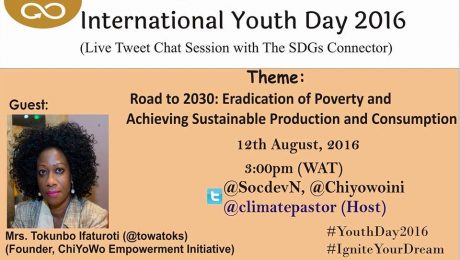
Road to 2030: Eradication of Poverty and Achieving Sustainable Production and Consumption
- Published in Events
The Saga of Malnutrition in Internally Displaced Camps
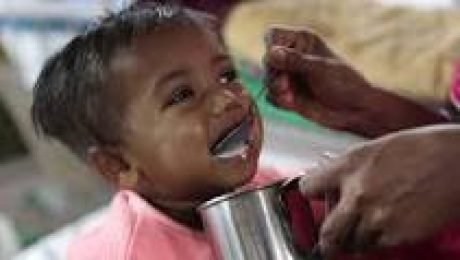
Malnutrition in Children in Internally Displaced Camps
In 2009 Boko Haram attacked Maiduguri the capital of Borno state and carried out a series of attacks on police stations and government buildings which led to confrontation, chaos and bloodshed on the streets. Hundreds of Boko Haram supporters were killed, and thousands of residents fled the capital.
Seven years later, this conflict is still on-going with no sign of abating any time soon. Over 15 million people affected by this conflict and within Nigeria’s borders more than 1.8 million people have been forcibly displaced. Alarmingly, 7.4 million people are in need of humanitarian assistance, with more than 50 percent being children.
These children, who are already living in precarious situations and poverty, are left with nothing. Right now, there are a quarter of a million children left severely malnourished. Malnutrition is defined as “lack of proper nutrition, caused by not having enough to eat, not eating enough of the right things, or being unable to use the food that one does eat.”
The largest attributing factor to children being malnourished is the lack of access to nutritious foods in these camps. Children are in need of an array of assorted vitamins, minerals, and micro-nutrients and without the proper type of food malnutrition occurs. When a child becomes malnourished, their body cannot even do the simplest of things such as continue to grow or fight off disease.
Currently, organizations like UNICEF, WFP, and OCHA are working hard to reach those severely malnourished children in these camps. The WFP plans on providing not only food but money as well to 1.8 million of the most vulnerable people while UNICEF is treating 133,000 severely malnourished children while providing healthcare to 3.3 million people.
There are also plans for the government to ramp up their efforts and establish an inter-ministerial response task force and appointing a Humanitarian Coordinator to liaise with the international community.
If you are looking to help these children in need there many organizations you can donate too. A few of them would be:
[1.] Vanguard – http://www.vanguardngr.com/2016/02/450-children-died-of-malnutrition-in-28-idp-camps-in-borno/ [2.] UNICEF – https://www.unicef.org/appeals/files/UNICEF_NorthEast_Nigeria_Snapshot_5_Feb__2015.pdf [3.] World Food Program – https://www.wfp.org/hunger/malnutrition [4.] UNICEF – https://www.unicef.org/appeals/nigeria.html#1 [5.] Humanitarian Response – https://www.humanitarianresponse.info/en/operations/nigeria/documents/document-type/humanitarian-programme-cycle [6.] UN OCHA – http://www.unocha.org/nigeria/about-ocha-nigeria/about-crisis
https://unocha.exposure.co/when-conflicts-starve-children
[7.] BBC News – http://www.bbc.com/news/world-africa-13809501
- Published in BLOG
International Day of the Girl Child in Benin, Nigeria
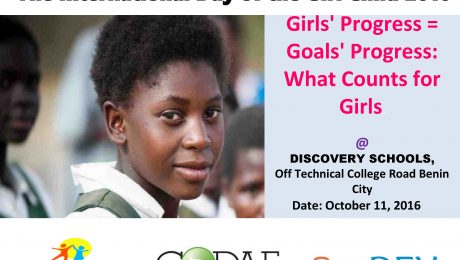
ChiYoWo Celebrates International Day of the Girl Child 2016 in Benin, Nigeria
Children, Youth and Women (ChiYoWo) Empowerment Initiative organized a one-day seminar to commemorate the international Day of Girl Child on 11th of October, 2016 at Discovery Schools, Benin City, Nigeria. The theme of this year’s event, “Girls’ Progress = Goals’ Progress: A Global Girl Data Movement, is a call for action for increased investment in collecting and analyzing girl-focused, girl-relevant and sex-disaggregated data, as what gets counted gets done. The Day increases awareness of issues and inequalities faced by girls around the world. To date, many global development plans do not include or consider girls, and their issues and problems become “invisible.”
The seminar helped raise awareness not only of the issues that girls face but also what is likely to happen when those problems are resolved. For instance, educating girls helps reduce the rate of child marriages, disease and helps strengthen the economy by enabling girls have access to higher paying jobs.
Onyeka Titigbe of ChiYoWo Empowerment Initiative and facilitator of the Girl Child event noted the objective of the seminar, was to empower the participants to be better leaders in the society. This was borne from the fact that the rate of girl child abuse, kidnappings and gender based violence in the society caused by culture, hunger and poverty, inadequate government policies and insurgency had been placed on the back burner for too long.
At the event Mrs. Rita Iyke-Uwaka, a forest and biodiversity officer of Environmental Rights Action/Friends of the Earth, Nigeria, emphasized on the need for immediate action to protect the girl child and stressed educating the girl child would help to reduce dependency on others and to a large extent, help lift families out of poverty. In addition, Mr. Cadmus Enade, from the Health of Mother Earth Foundation, urged them to maintain their dignity as girls, while Mrs. Caroline Ubrei Joe stated every girl has the potential of giving birth to a generation, not just a generation but generation of impact. She also spoke on how to achieve their career goals and advised them not to be distracted by irrelevant events.
In closing the event, Chiyowo Empowerment Initiative donated a total of ten (10) copies of Ben Carson’s life changing books “Gifted Hands” and “Think Big” to 10 students who were encouraged to read and learn from the books.
ChiYoWo Empowerment Initiative is a non-profit organisation seeking to Reposition Children, Youth and Women towards Sustained Livelihoods.
- Published in Events
ChiYoWo Rehabilitates Water Borehole for Internally Displaced Persons in Abuja, Nigeria
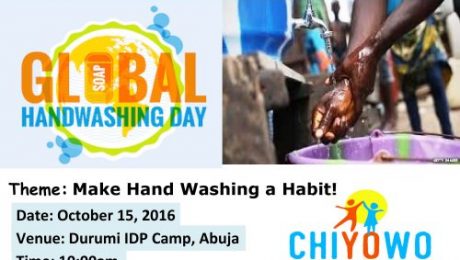
ChiYoWo Empowerment Initiative Rehabilitates Abandon Water Borehole For Internally Displaced Persons in Abuja, Nigeria
On 15th October 2016, ChiYoWo Empowerment Initiative marked the Global Handwashing Day by repairing and restoring a disused water borehole at the Internally Displaced Persons Camp in Durumi, Abuja, Nigeria. ChiYoWo which is an acronym of Children, Youth and Women focused attention on the importance of water, sanitation and hygiene and the significance of washing hands after going to the toilet, playing outside, farming, selling goods and produce, working and more.
According to Globalhandwashing.org every year, 1.7 billion children do not live to celebrate their 5th birthday because of diarrhea and pneumonia. Three quarters of these children are located in Sub-Saharan Africa and South Asia. This Project was based on the Day’s theme ‘Make Handwashing a Habit’. ChiYoWo empowered mostly women and children on the most effective way to prevent such diseases, by providing them with sustainable water and informing them of the importance of using soap when washing hands.
We are proud to say the host community and most especially over 300 women and 400 children living in Durumi IDP Camp now have access to clean water, which will be used for cooking, bathing, farming and their general well-being. According to the Chairlady of the IDP Camp whom we spoke with 2 weeks later, “every day women and our young girls pray for you when they go to fetch water from the borehole, because water is the most important thing women need in their lives”.
ChiYoWo Empowerment Initiative is a non-profit organisation seeking to Reposition Children, Youth and Women towards Sustained Livelihoods.
- Published in Events
International Volunteer Day
International Volunteer Day
By ChiYoWo
International Volunteers Day was created in 1985 for organizations, communities, and individual volunteers to celebrate and make visible their contributions at local, national, and international levels. It is now observed every year on December 5th.
Volunteering is defined as, “a person who voluntarily offers himself or herself for a service or undertaking.”
Nigeria is the most populous nation in Africa with an estimated 170 million people, but despite being the largest economy, poverty rates are still climbing with 65% said to be living in extreme poverty. These conditions breed discontent and disaffection amongst youth. It also becomes an entry way for corruption, Islamic extremism and ineffective governance. VSO International says Nigeria needs to create at least 2.5 million jobs every year for the next decade to meet the needs of its growing workforce, and with 10.5 million children currently out of school, something needs to be done.
That is where volunteering comes in. There are many great benefits to volunteering. It can help
- fight poverty
- improve education
- by making sure that everyone gets the skills they need to live a full, exciting, and dignified life.
- volunteering can also help contribute to the delivery and enhancement of education. Baker, Gersten and Keating (2000) showed that volunteers can have a direct impact on students such as helping them to learn how to read.
- improve health
- by making sure people have access to better quality healthcare.
- improve livelihoods
- Giving people the freedom to live with independence and dignity by offering secure and reliable access to food and income.
It also has positive effects on the volunteers themselves, bot intrinsically and extrinsically. It can help with self-esteem, open and expand career paths and allow them to get proper training, along with helping with mental and physical health. They are also able to build up their resumes, develop leadership skills, and develop long lasting relationships with people in their communities and community leaders.
There are many things for today’s youth to volunteer with. Things like working in a foodbank, volunteering for administrative tasks, working with children, and working with the homeless are just a few.
If you are interested in volunteering there are numerous volunteering projects available.
A few for you to look at are:
- http://www.icyenigeria.org/projects.html
- http://www.opportunitiesforafricans.com/category/volunteering/
- https://www.chiyowo.org
Let’s all start coming together and becoming a cohesive community. Let’s make sure everyone has the access to healthcare, education, and a chance for great livelihoods! Help us observe International Volunteers Day and show appreciation for our volunteers all around the world!
Sources:
Points Of Light – http://www.pointsoflight.org/sites/default/files/site-content/files/social_impact_of_volunteerism_pdf.pdf
VSO International – https://www.vsointernational.org/volunteering/ICS-youth-volunteering
VSO International – https://www.vsointernational.org/sites/default/files/the_role_of_volunteering_in_sustainable_development_2015_vso_ids.pdf
USAID – https://www.usaid.gov/nigeria
- Published in BLOG
Stand Up For Someone’s Rights Today
Stand Up For Someone’s Rights Today
By ChiYoWo
On December 10, 1948 the United Nations General Assembly adopted the Universal Declaration of Human Rights. This document set out fundamental human rights to be universally protected. Human Rights Day is now observed every year on December 10th to commemorate this huge milestone in human rights history.
Many feel that this year’s Human Rights Day is an especially important one because of the way the world is currently heading. People are fearful. Fearful for their lives and the lives of others. All over the globe there is disrespect for the most basic of human rights. There are senseless killings surrounded by messages of hate and intolerance. People come face to face with horrific violence from extremist movements. People are scared to be themselves, and we must put a stop to it.
This year’s theme is Stand Up For Someone’s Rights Today. United Nations states, “We must reaffirm our common humanity. Wherever we are, we can make a real difference. In the street, in school, at work, in public transport; in the voting booth, on social media.”
Ways to stand up for rights:
- Read and share the Universal Declaration of Human Rights.
- Stand up for someone that you see is being bullied or harassed. It doesn’t matter if you see it online, at the mall, or at school.
- Donate to organizations that help those affected by human rights abuse.
- Combat myths with facts. Challenge those harmful stereotypes.
- Educate your children about human rights. Show them positive and diverse role models.
Though only a few are listed, there are many things you can do to stand up for human rights not just on Human Rights Day, but every day of the year. Eleanor Roosevelt once said, “Where, after all, do universal human rights begin? In small places, close to home — so close and so small that they cannot be seen on any maps of the world. […] Unless these rights have meaning there, they have little meaning anywhere. Without concerted citizen action to uphold them close to home, we shall look in vain for progress in the larger world.”
If we want the world to change, it must start within ourselves first.
Source:
United Nations – http://www.un.org/en/events/humanrightsday/background.shtml
United Nations – http://www.un.org/en/events/humanrightsday/
United Nations Office of the High Commissioner – http://www.ohchr.org/EN/AboutUs/Pages/HumanRightsDay.aspx
- Published in BLOG
What is AIDS?
What is AIDS?
By ChiYoWo
AIDS stands for Acquired Immune Deficiency Syndrome. AIDS is caused by the HIV virus. AIDS occurs when the HIV infection is very advanced, and your immune system is too weak to fight off infections. This is the last stage of HIV where your body is too weak to fight off or defend itself and may develop various infections and diseases. If left untreated the probability of death is high.
What is HIV?
HIV is a disease that gradually attacks our body’s natural defense against illnesses-the immune system. The HIV virus attacks and destroys a type of white blood cell known as the T- helper cell. While destroying the T- helper cell, it makes a copy of itself and places it inside it. The HIV virus makes it extremely difficult for your body to fight off illnesses and diseases.
There are two types of HIV:
- HIV-1: The most common type found worldwide.
- HIV-2: Mainly found in Western Africa, with some cases in India and Europe.
There is currently no cure for AIDS or HIV, but with the right treatment people who are infected can live long, healthy lives.
At the end of 2015 there were 36.7 million people who were living with HIV, with 9% of those people living in Nigeria. That means that there are 3.5 million people living with HIV in Nigeria alone. Globally, 15% of women that are living with HIV are between the ages of 15 -24 years old with 80% living in Sub-Saharan Africa. 400,000 children in Nigeria are currently living with HIV. Most of these children become infected by mother-to-child transmission which includes pregnancy, giving birth, and breast feeding. Other instances include sexual transmission, children who inject drugs and infection through medical/healthcare settings (though this is rare).
UNAIDS says that of the 36.7 million people that are infected with HIV, 19 million of them do not know their HIV-positive status and that adolescent girls and young women make account for one in four new HIV infections in Sub-Saharan Africa.
Though in recent years the numbers of AIDS related deaths and new HIV infections have been on the decline, it is still very much a major issue around the world. It is important for everyone to be educated, practice safe sex and to get themselves tested.
Please join us in raising awareness on AIDS and the impact it has on people, their families and our world on December 1, 2016 for World AIDS Day.
Sources:
[1.] UNAIDS – http://www.unaids.org/en/resources/fact-sheet [2.] World AIDS Day – https://www.worldaidsday.org/ [3.] Avert – http://www.avert.org/professionals/hiv-around-world/sub-saharan-africa/nigeria#footnote1_koph3hb [4.] UNAIDS Gap Report – http://www.unaids.org/sites/default/files/media_asset/UNAIDS_Gap_report_en.pdf [5.] WHO – http://www.who.int/gho/hiv/en/ [6.] Avert – http://www.avert.org/about-hiv-aids/what-hiv-aids
- Published in ARTICLES